It’s not just what you say—but how you say it that can help your wrestlers win more matches.
Most coaches only operate with three tones of voice: panicked, pissed off, and disappointed. Not because that’s their strategy—but because they’ve never learned to use their voice intentionally.
The result? No matter what the wrestler does, it feels like it’s never good enough.
Now don’t get me wrong. High standards matter. Accountability matters. Pushing wrestlers to their potential is our job. But getting the most out of an athlete requires more than emotion—it requires understanding how your voice can influence the mindset of your wrestler.
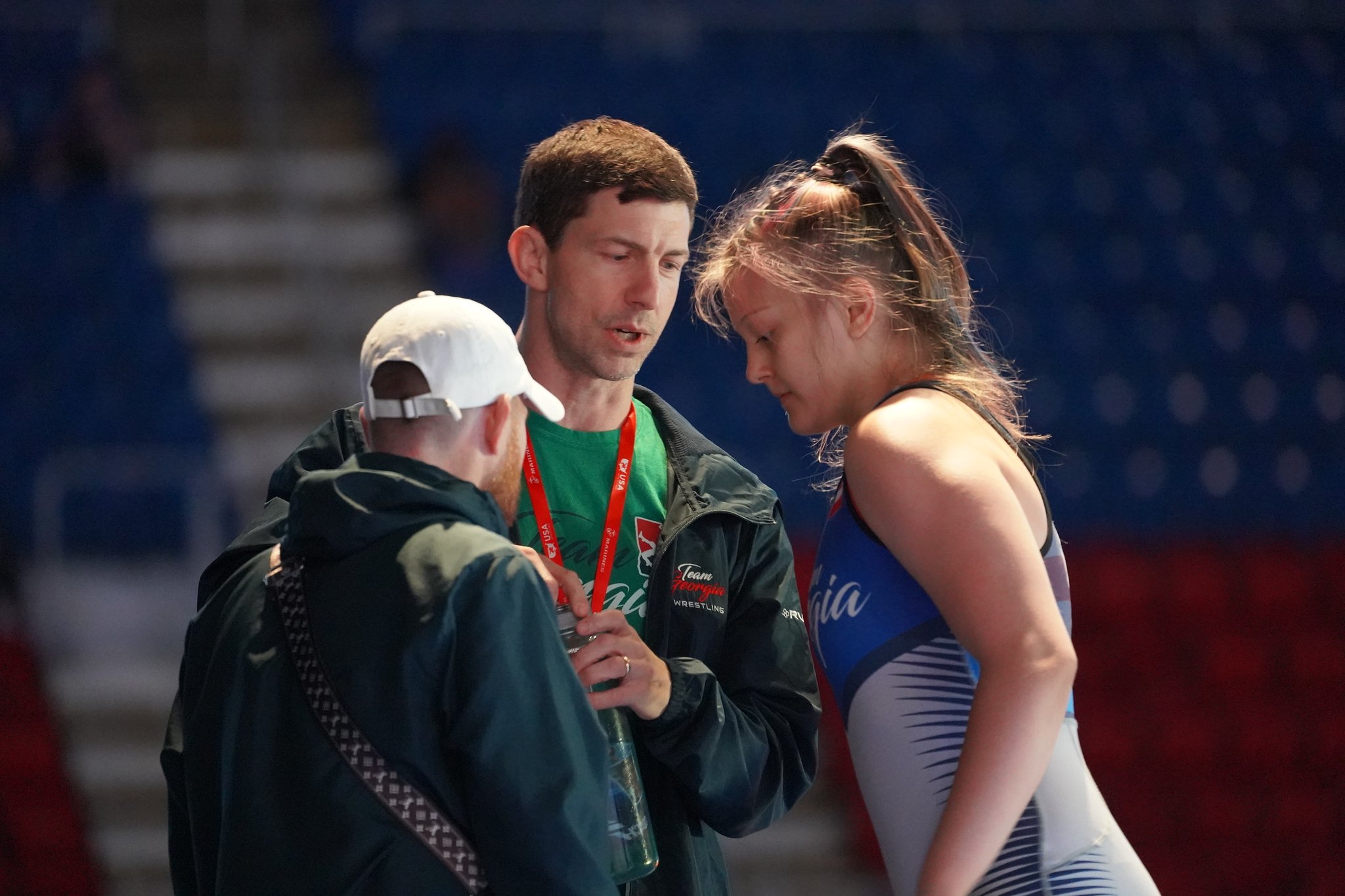
In the heat of a match, your voice becomes a performance tool. It can calm or escalate. Clarify or confuse. Empower or tighten. Your tone can be the difference between a wrestler finding the motivation to win… or falling apart under pressure.
It’s often said that Dan Gable’s greatest gift as a coach was his ability to understand each athlete’s personality and push the right buttons at the right time. Tone is one major way those buttons get pushed.
Below are a few tones of voice every coach should have in their tool kit:
- Calm & Grounding (before a big match or during a chaotic one)
- Purpose: Settle nerves, slow the heart rate, build clarity, regain focus and control
- Tone: Low, steady, confident, almost quiet. Depending on the wrestler, could be joking and laid back. Think Cael Sanderson.
- Effect: Signals safety and control; helps the wrestler feel composed and focused.
- Example: When your wrestler is noticeably stressing out or wrestling tight there is a difference between yelling, “Hey calm down!” and saying something like “You’re good here, take a deep breath.”
- Present-Focused & Resetting (The “Next Point” Mentality)
- Purpose: Instantly detach from the last exchange—good or bad—and lock attention onto the next position and the next action.
- Tone: Sharp, composed, forward-looking. No emotion tied to the past, no judgment—just clarity and urgency.
- Effect: Breaks emotional carryover, prevents momentum swings, and trains the athlete to live in the moment.
- Example: This tone sounds like certainty about what comes next, not what just happened. It’s clean, fast, and matter-of-fact. The message is: “That’s over. Here’s now. Execute.”
- Commanding & Direct (During Tactical Moments)
- Purpose: Cut through noise and confusion.
- Tone: Short, sharp, authoritative. Not panicked or stressed.
- Effect: Gives the brain simple instructions it can execute under stress.
- Example: “Head position”, “Stance check”, “Yes, more pressure”
- Dominant & Relentless (Momentum-Building Confidence)
- Purpose: Keep the foot on the gas; turn recent points into unstoppable momentum.
- Tone: Powerful, assertive, energized, and absolutely certain.
- Effect: Creates a feedback loop of belief and aggression—each score fuels the next, and confidence snowballs into dominance.
- Example: This tone is not rushed and sounds like expectation.“Yes. Stay on him. Cut him, do it again.”
- Instructional & Conviction (Between Periods / Technical Adjustments)
- Purpose: Transfer information clearly. Conviction = trust.
- Tone: Even, precise, unemotional.
- Effect: Keeps the brain in problem-solving mode.
- Example: In the Fargo Greco semis, one of my wrestlers was down 7-0 with 30 seconds to go and there was injury time. I had no panic in my voice. I just matter-of-factly said “you have two choices: duck under to a 5 and a gut wrench; or arm drag to a trapped arm gut”. I knew the choice he would make and after a successful arm drag, he gutted the guy 3 times for the win and ended up winning Fargo. My wrestler trusted & executed the plan, part of which was because of my confident tone.
- Confident & Believing (When the Wrestler Doubts Themself)
- Purpose: Restore belief when they need to grit out a win and they aren’t sure of themselves.
- Tone: Firm, positive, unshakable, matter of fact
- Effect: Borrowed confidence—your certainty becomes theirs. They trust you when you say “you can do it”
- Example: This is the “you can do hard things” tone. Often times you may need to say, “look at me…you’ve got this”
- Quiet & Assuring (Calm Confidence for Rhythm and Flow)
- Purpose: Reduce mental noise and let the wrestler settle into instinct and flow. Good for over thinkers.
- Tone: Soft, minimal, steady, and confident.
- Effect: Lowers cognitive load, reinforces trust in their feel and timing, and keeps them in the zone without over-coaching.
- Example: This tone says just enough to reassure them they are on the right path: “You’re good. Trust what you feel.” Over thinkers try to be perfect and they need to be reminded to turn off their brain and let their body do the work.
- Urgent & Igniting (When You Need to Light a Fire)
- Purpose: Spark intensity and urgency. Especially when they get tired late in a match.
- Tone: Louder, faster, emotionally charged.
- Effect: Raises arousal level and reminds the athlete the moment matters.
- Example: There is a difference between being an A-hole yelling the whole match that the wrestlers don’t respect and one they want to wrestle hard for who demands excellence. This tone isn’t the traditional panicked “you gotta go!!!!” It’s more like “Let’s go, pick up the pace! Start your sprint now.”
- Challenging & Demanding (When They’re Coasting)
- Purpose: Raise standards and accountability.
- Tone: Intense, honest, no-nonsense.
- Effect: Triggers pride and competitive fire.
- Example: How this is different than lighting a fire is it’s less of a yelling tone and more of a “hey, I expect more…let’s get going”
- Motivational & Emotional (End of Period / Final Match Push)
- Purpose: Access deeper effort.
- Tone: Passionate, inspirational, powerful.
- Effect: Engages the heart, not just the head.
- Example: While this is also a raised/yelling tone, this isn’t directive like lighting a fire. It’s more about helping them dig deep inside themselves. It let’s them know they are on the right path and helps you pull the motivation out from within them. It’s more like, “Yes! Yes! Keep going. Hook the ankle, you got it!!! Let’s goooooo!!!!”
Remember, tone only works when there is trust. When that trust is built, you and your wrestler become in sync during a match—reading each other, riding the momentum shifts, and navigating the emotional swings together.
Experiment with these tones. Pay attention to how different athletes respond in different moments. Over time, your voice becomes a tool they rely on, not just noise in the corner.
And like any part of coaching, this is a skill you can keep refining. If you’ve found other tones that consistently bring out the best in your wrestlers, I’d love to hear them.
Coach Donovan
Level Up Wrestling